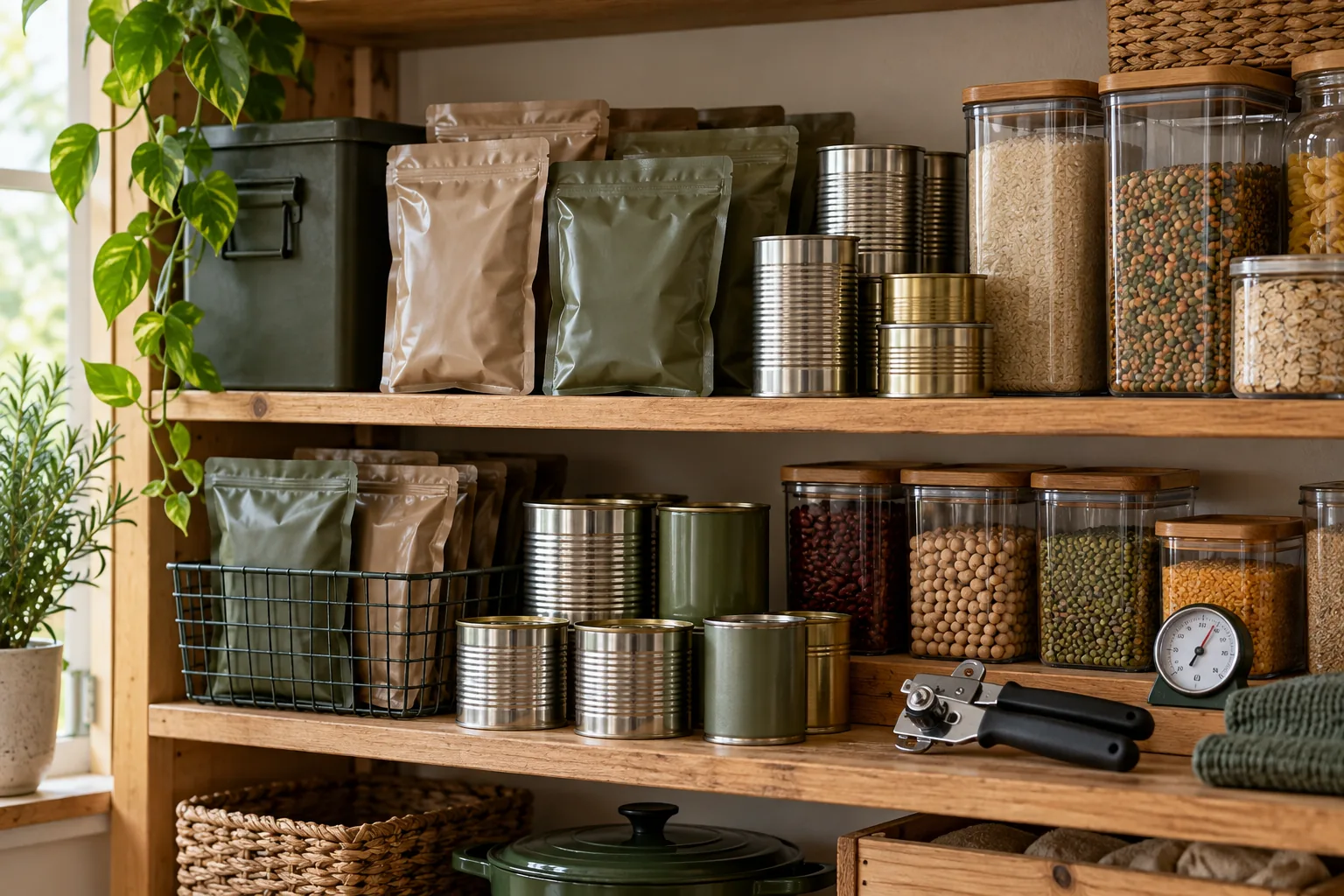
FOODSimple individual meals
Mountain House meal assortments
Pouch-based meals are easy to divide, rotate, and prepare without opening a large bucket.
Before buying: Convenience can cost more per calorie, and sodium or portion size may not fit every household.
FOODVariety in one package
ReadyWise emergency buckets
Mixed entrees and breakfast items simplify a starter reserve and are widely distributed.
Before buying: Serving counts can overstate the number of full days; inspect total calories and water demand.
FOODBulk calories and pantry building
Augason Farms staples
Grains, beans, dairy alternatives, and meal components can lower cost per calorie and support a layered pantry.
Before buying: Larger cans are less convenient after opening and often require more cooking, planning, and recipe knowledge.
FOOD SAFETYSimple visible temperature
ThermoWorks RT801 refrigerator freezer thermometer
A dedicated appliance thermometer provides a clear current reading without accounts, apps, or complicated setup.
Before buying: You must open the door to read it, and it does not preserve a temperature history during an unattended outage.
FOOD SAFETYMonitoring two compartments
AcuRite digital wireless refrigerator freezer thermometer
Remote sensors let you check refrigerator and freezer conditions while keeping doors closed.
Before buying: Wireless range and battery life vary with walls and appliance construction; test placement before relying on alarms.
FOOD SAFETYTemperature history
SensorPush HT1 wireless thermometer hygrometer
Logged readings can show how warm the compartment became and for how long, which is more useful than one current reading.
Before buying: Remote alerts away from home may require an additional gateway, and the sensor must be used within its environmental limits.
FOODRecognizable complete-meal format
SOPAKCO Sure-Pak 12 civilian MRE case
Individually sealed ready-to-eat meals are easy to count, move, and issue without opening a bulk container.
Before buying: Confirm the current menu, production date, heater inclusion, and seller storage history; marketplace listings vary.
FOODMenu variety and case storage
MRE Star civilian MRE case
Complete meal kits provide an entrée plus supporting components in a portable package that does not require refrigeration.
Before buying: Read the exact listing for calorie range and accessories. Do not assume every case contains flameless heaters.
FOODShort-outage no-cook reserve
Meal Kit Supply civilian MRE case
Individually packed meals cover the first phase of an outage when water, power, and normal cooking are disrupted.
Before buying: Check package dates and calories. Shipping heat and unknown warehouse conditions can shorten quality life.