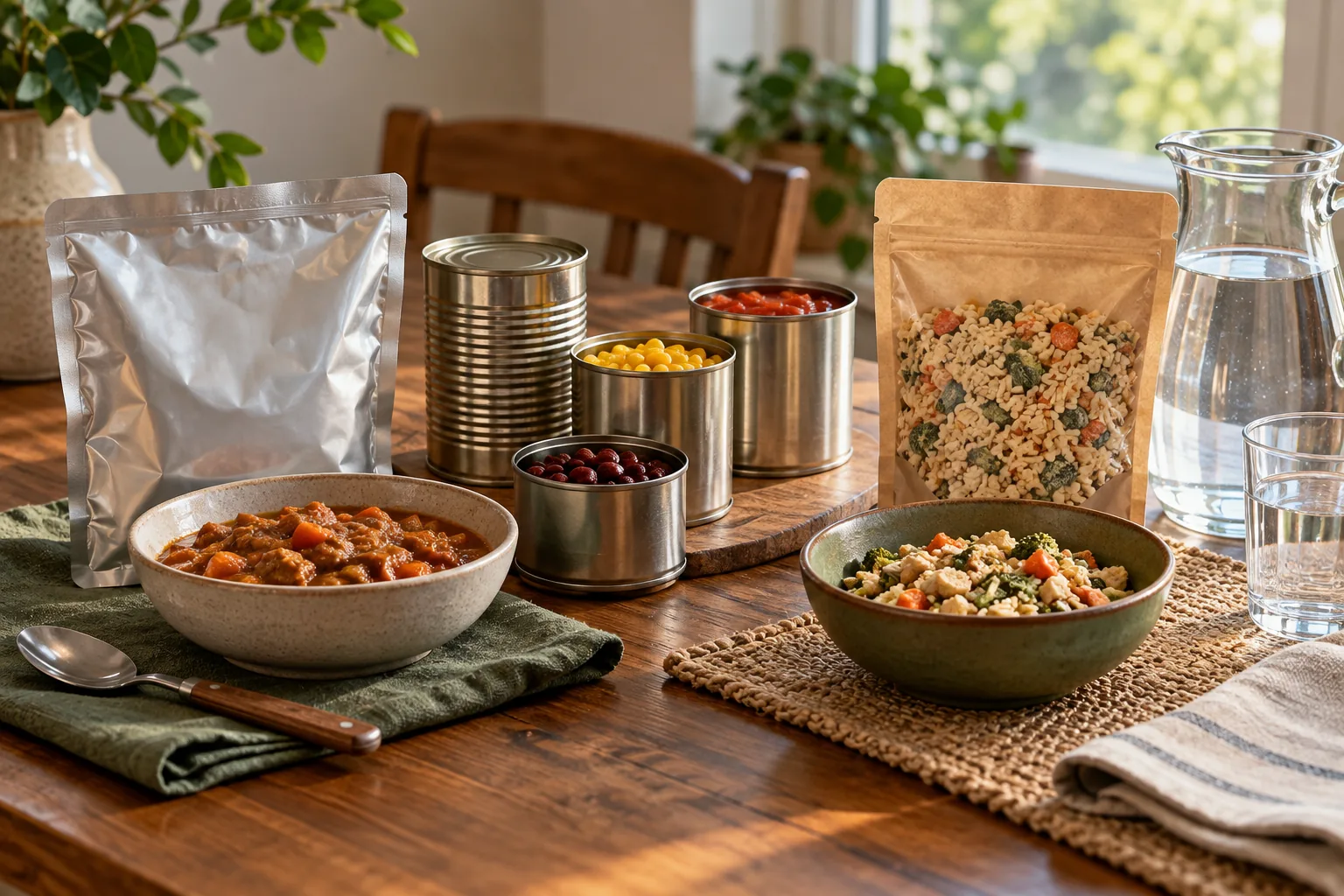
Compare the top options
Affiliate disclosure: As an Amazon Associate I earn from qualifying purchases.
Complete ready-to-eat meals reduce dependence on water, cookware, and utilities.
Higher cost per calorie, heat-sensitive storage life, sodium, and variable package dates.
Individual freeze-dried pouches are easy to divide, sample, and prepare one at a time.
Preparation consumes clean water; verify calories because a pouch may contain multiple servings.
Soups, chili, meat, beans, fruit, and vegetables can be bought gradually and used in normal meals.
Cans are heavy and bulky; store a manual opener and follow official discard guidance after damage or flooding.
These are research-based recommendations, not claims of hands-on testing. Prices and availability change; confirm the exact model and current specifications before buying.
Compare the job, not the shelf-life headline
Emergency food must feed people immediately, travel during evacuation, stretch through a utility outage, and remain affordable enough to maintain. Each format solves a different part of that problem.
Compare calories, protein, preparation water, cooking requirement, weight, storage conditions, allergens, and cost. Serving counts conceal too much.
MRE advantage: no added water
MREs contain moist ready-to-eat food, so entrées do not require rehydration. That preserves stored water and avoids making cooking a requirement.
Because the water is already inside, cases are heavier. Heat exposure is a weakness, and the convenience premium can consume money that would buy more pantry calories.
Freeze-dried advantage: weight and storage
Removing water reduces weight and can support long unopened shelf-life claims under the manufacturer's conditions. Pouches are convenient; bulk cans can reduce cost when a household will use the opened contents.
Every dry-meal plan creates a water plan. Add exact preparation water, drinking water, cleanup water, and fuel if meals are intended to be served hot.
Canned-food advantage: value and familiarity
A rotating pantry lets households buy during sales, test every item, and eat supplies before they are wasted. Many canned foods can be eaten without heating.
Cans are heavy and need protection from flooding, rust, freezing, and damage. Keep two manual can openers and follow USDA guidance when disaster conditions affect stored food.
A practical layered mix
Use ready-to-eat food for the first one to three days, a rotating pantry for the next layer, and selected long-life meals or staples for longer storage. Adjust for evacuation, space, dietary restrictions, infants, older adults, and medical needs.
Run the plan through the food calculator. If calories, water, or fuel do not balance, change the mix before buying more buckets.
Frequently asked questions
Are MREs better than freeze-dried meals?
They are better when water and cooking are limited. Freeze-dried meals are lighter and may store longer, but require clean water. Most households benefit from both.
Is canned food good for emergencies?
Yes. It is familiar, widely available, often edible without heating, and easy to rotate. Protect it from heat, freezing, flooding, rust, and damage.
What should I buy first?
Begin with several days of food your household already eats, including a no-cook layer. Add specialty products after calories, water, preparation, and dietary needs are covered.
Sources and verification
We prioritize public-health guidance, official manuals, and manufacturer specifications. Always check the current manual for the exact model you purchase.