Compare the top options
Affiliate disclosure: As an Amazon Associate I earn from qualifying purchases.
A rigid bucket adds handling, moisture, and pest protection while organizing smaller bags.
A bucket alone is not automatically an oxygen barrier. Verify food-grade status and lid seal.
Smaller sealed portions reduce exposure each time the reserve is opened and fit inside protective buckets.
Seal quality matters. Do not package moist or oily foods as though they were dry staples.
Correctly used absorbers reduce oxygen in a sealed barrier bag and help protect suitable dry foods.
Use the correct size, work quickly, and follow qualified guidance. They are not appropriate for every food.
These are research-based recommendations, not claims of hands-on testing. Prices and availability change; confirm the exact model and current specifications before buying.
Package the food, then protect the package
Barrier bags and rigid buckets perform different jobs. The sealed bag limits oxygen and moisture transfer; the bucket protects against punctures, light, handling, and pests. For many dry staples, both are stronger than a snap-lid bucket alone.
Professionally packaged MREs and freeze-dried meals should normally remain in their original packaging. Repacking removes labeling and controls that make them useful.
Only store foods suited to the method
Low-moisture staples such as white rice, dry beans, rolled oats, and selected pasta are common storage candidates. Foods with meaningful moisture or oil behave differently and can create safety or rancidity concerns.
Use tested guidance for the exact food and method. Vacuum sealing or adding an oxygen absorber does not turn unsuitable food into shelf-stable food.
Smaller packages improve rotation
One giant bag may be efficient until it is opened. Smaller bags let a household inspect, use, and rotate food without exposing the entire reserve. Package sizes should match what can be consumed after opening.
Label the food, net weight, packaged date, review date, preparation instructions, allergens, and absorber size. Preserve the original nutrition and cooking information.
Storage furniture is part of the system
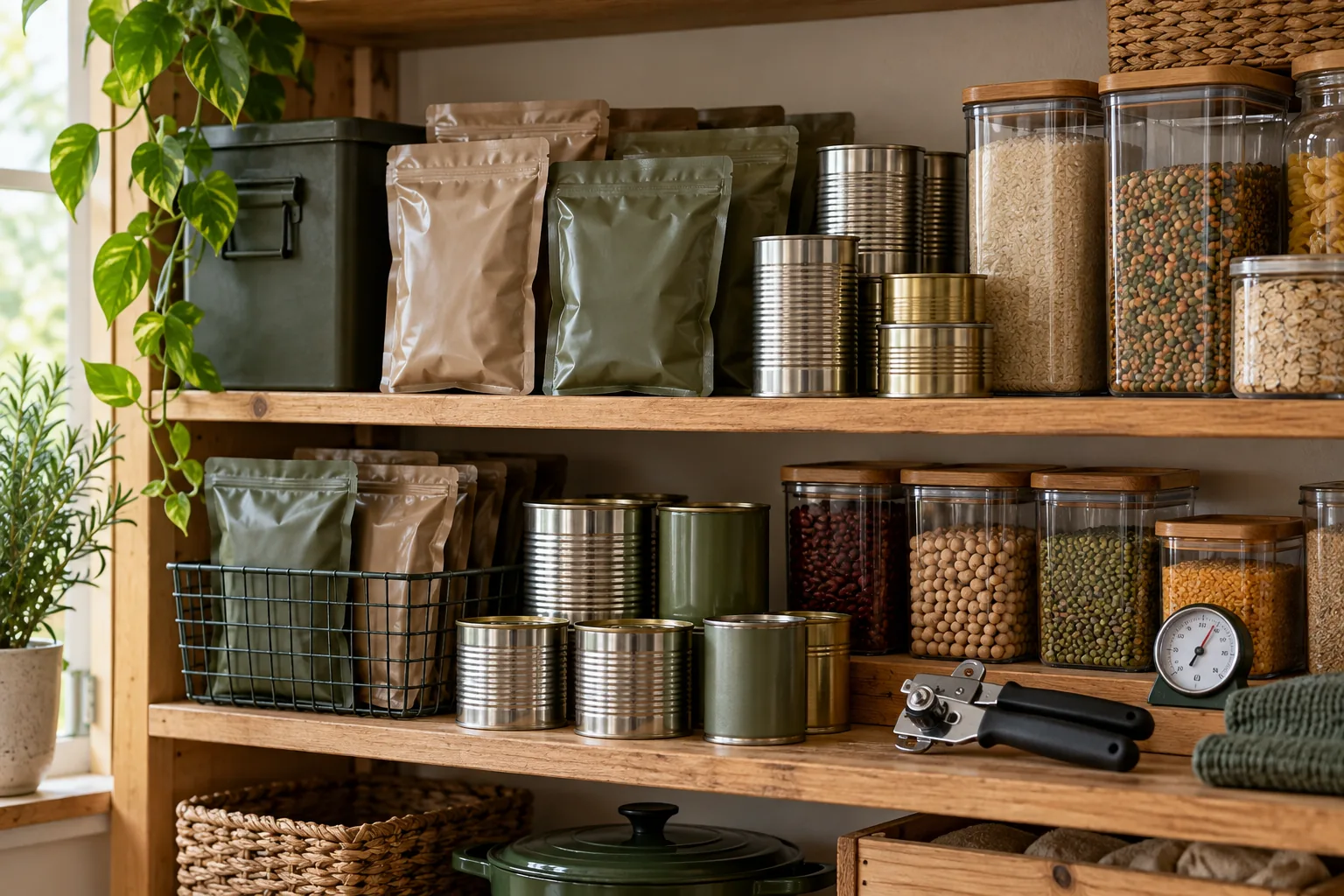
Use shelving rated for the real weight and keep food above floor level. Protect it from plumbing leaks, flooding, direct sun, chemicals, rodents, and temperature extremes. Heavy buckets belong low enough to lift safely.
Track minimum and maximum temperature. A location that feels cool one evening may overheat seasonally.
Inventory prevents forgotten food
Maintain a list of item, calories, package date, quantity, location, and next inspection. Review twice a year and move older suitable packages into normal meals.
The goal is not the largest number of years on a label. It is a reserve that remains intact, nutritious, understandable, and ready to prepare with the water and fuel available.
Frequently asked questions
Are food-grade buckets airtight?
Some lids seal well, but a bucket may still serve mainly as physical protection. Follow qualified guidance for the food, bag, seal, and absorber.
Should MREs go in Mylar bags?
No additional bag is normally needed when original packaging is intact. Preserve labels and inspect the manufacturer's package rather than repacking it.
Can brown rice be stored like white rice?
Brown rice contains more oil and generally has a shorter quality life. Do not assume every grain follows the same method or timeline.
Sources and verification
We prioritize public-health guidance, official manuals, and manufacturer specifications. Always check the current manual for the exact model you purchase.