Compare the top options
Affiliate disclosure: As an Amazon Associate I earn from qualifying purchases.
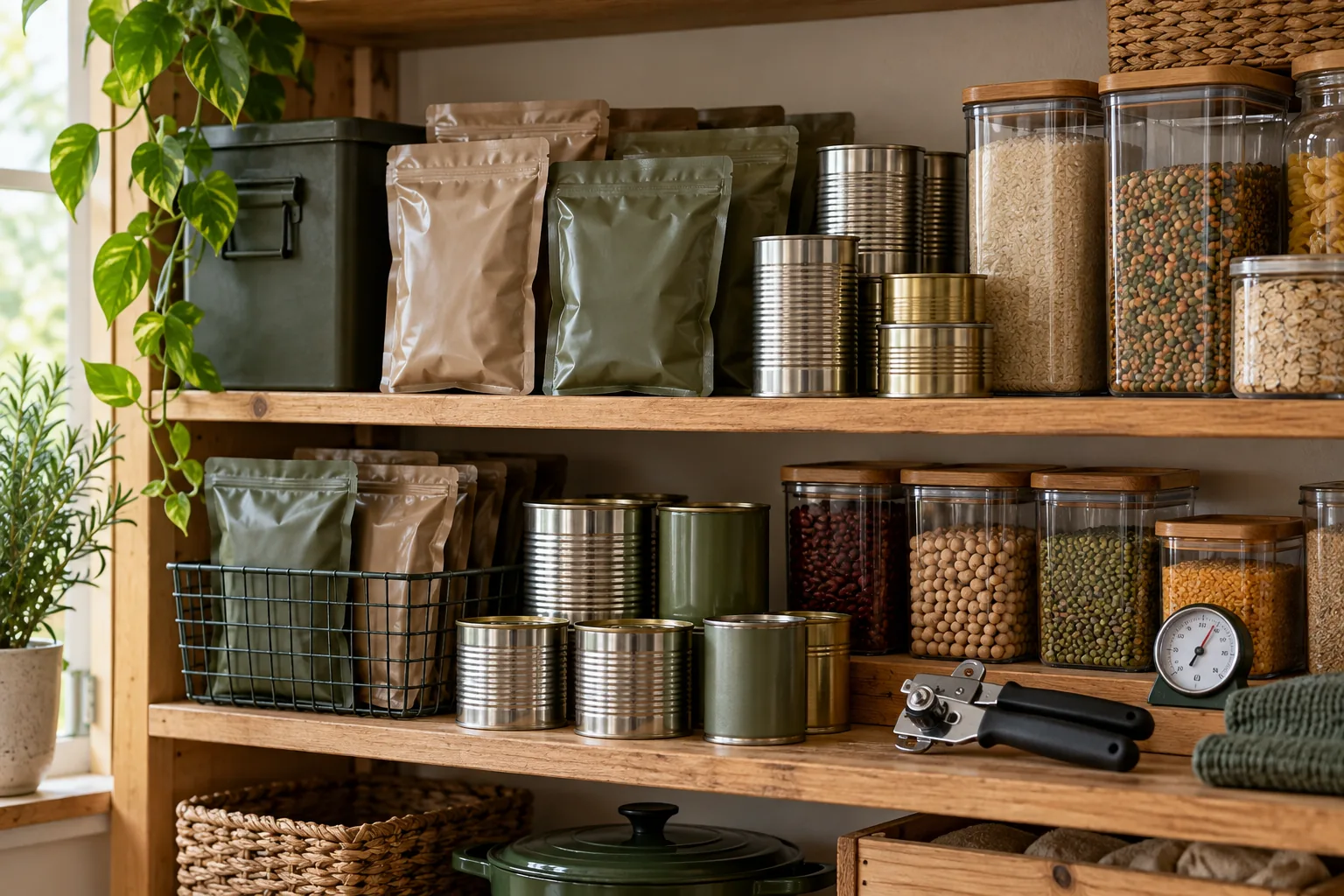
Individually packed meals cover periods when cooking and cleanup are difficult.
Check calories and dates; do not buy 30 days of expensive MREs by default.
A reusable lid helps make a bucket practical for a rotating pantry.
A bucket and lid do not make moist foods shelf-stable or replace suitable inner packaging for longer storage.
A temperature history helps identify hot storage spaces before quality declines.
Follow each food maker's storage guidance and keep food away from chemicals and flood risk.
These are research-based recommendations, not claims of hands-on testing. Prices and availability change; confirm the exact model and current specifications before buying.
Count person-days and calories
Multiply household size by 30 days, then set a reasonable calorie target for each person. For four people, this is 120 person-days. At an example 2,000 calories per person per day, the arithmetic is 240,000 calories. This is a planning example, not a universal diet prescription.
Use the emergency food calculator and a simple inventory sheet. Package serving counts often assume small portions; enter the actual calories you intend to serve.
Individually packed meals cover periods when cooking and cleanup are difficult.
Check on AmazonLayer the month instead of buying one giant kit
Keep the first two or three days as no-cook meals, canned food, snacks, and shelf-stable drinks. Build the next several weeks around familiar staples and canned proteins, vegetables, fruits, oils, and sauces. Add freeze-dried meals where low weight or quick preparation justifies their price.
A balanced mix gives you options when water or cooking fuel is limited, and it is easier to rotate through normal meals than a pantry built solely from specialty kits.
- Days 1–3: ready-to-eat food and a manual can opener
- Days 4–14: canned meals and familiar shelf-stable groceries
- Days 15–30: rotating dry staples and selected longer-life meals, with water and cooking fuel
A reusable lid helps make a bucket practical for a rotating pantry.
Check on AmazonCount water and fuel independently
A month of dry food is not a month of usable meals without safe water, a cooking plan, and fuel. The basic one-gallon-per-person-per-day water figure is a starting point for drinking and basic needs; cooking, hot weather, pets, and hygiene can add substantially more.
For a 30-day goal, plan how you will replenish or treat water instead of assuming you can conveniently store every gallon. Never run fuel-burning cooking equipment indoors unless the appliance is specifically approved for that use and you follow its instructions.
Store in a way you can actually maintain
Put food on shelves above potential floodwater, keep it cool and dry, record the purchase and printed dates, and group items by meal type. Use the manufacturer's storage guidance. Food-grade buckets can organize dry staples; the suitability of Mylar and oxygen absorbers depends on the exact food and packaging instructions.
Review the inventory twice a year, eat and replace older suitable items, and reject damaged or bulging packages. Do not treat a bucket as a safety guarantee.
A temperature history helps identify hot storage spaces before quality declines.
Check on AmazonFrequently asked questions
How much food is one month for a family of four?
It is 120 person-days. At an example 2,000 calories per person per day, that is 240,000 calories, adjusted for the actual household.
Should I store only freeze-dried food?
A mixed pantry of ready-to-eat, canned, and dry foods is usually easier to use and rotate. Freeze-dried products often need added water.
Can I store all 30 days of water?
A four-person household's basic one-gallon-per-person-per-day figure adds up to 120 gallons before extra needs. Plan safe storage and replenishment or treatment based on your space and water sources.
Sources and verification
We prioritize public-health guidance, official manuals, and manufacturer specifications. Always check the current manual for the exact model you purchase.