Battery power station
Best for indoor essentials, apartments, short outages, quiet nights, and measured loads.
Calculate battery runtimeBACKUP POWER
Start with watts and runtime. Then compare battery capacity, inverter output, charging speed, ports, and replacement options.
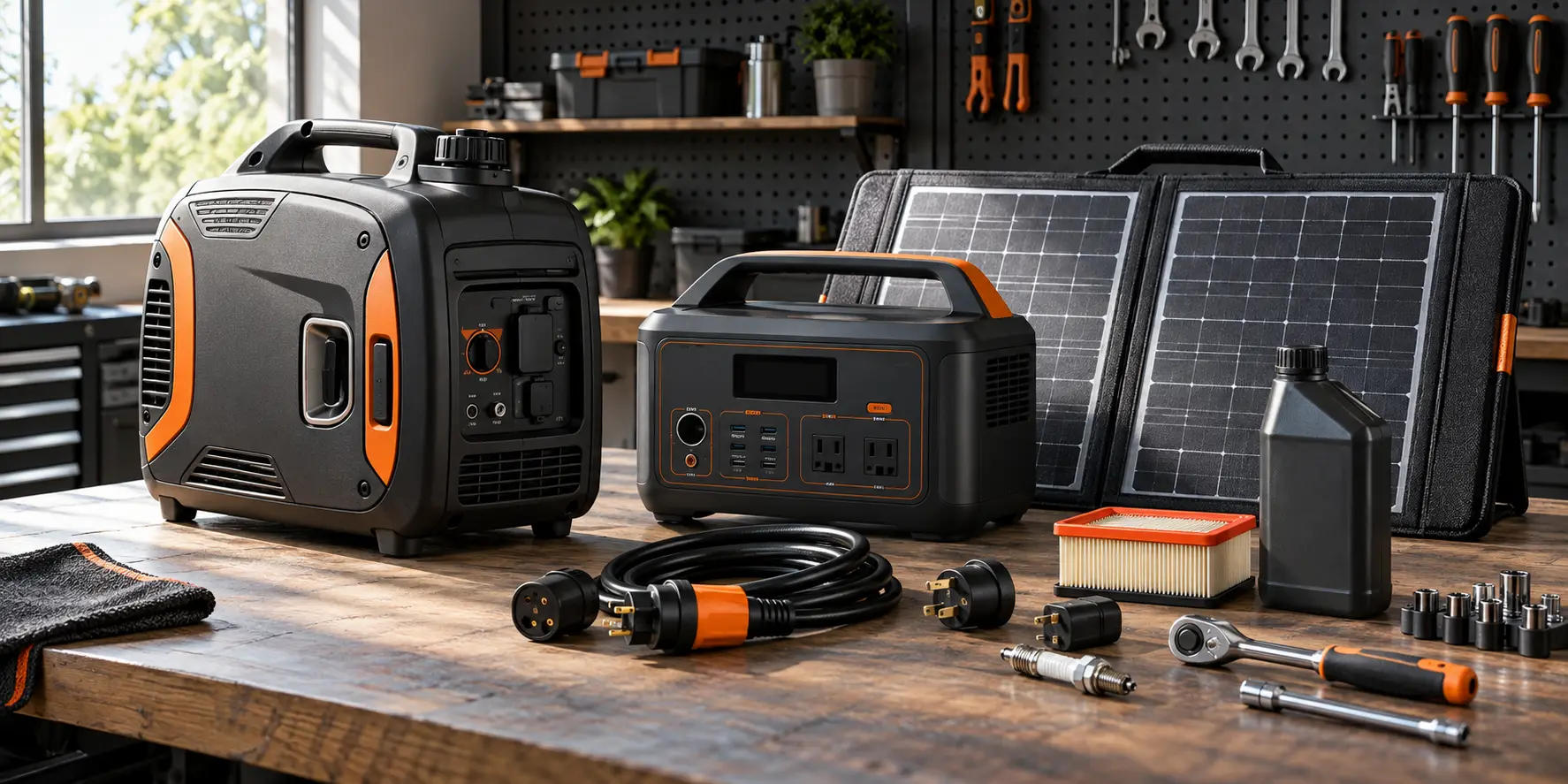
CHOOSE BY THE JOB
Start with the failure that creates the greatest risk in your home. The right system follows from the load, the required runtime, and where it can safely operate.
Compare a quiet indoor battery bridge with a small inverter generator. Measure 24-hour energy and verify compressor startup before buying.
Build a refrigeration plan CPAP + COMMUNICATIONSSize from measured overnight energy, humidifier use, networking equipment, lighting, and the number of nights you need.
Plan quiet indoor power PUMPS + MOTOR LOADSSump pumps, well pumps, furnace blowers, and compressors can demand far more power at startup than while running.
Size a motor load ESSENTIAL HOME CIRCUITSPrioritize refrigeration, water, heat, medical needs, and communications before pricing a transfer-ready or expandable system.
Plan essential circuitsTHE THREE PRACTICAL SYSTEMS
A battery is quiet and usable indoors but holds a finite amount of energy. A fuel generator supports longer outages but must operate safely outside. A hybrid lets the battery carry quiet overnight loads while the generator handles charging and heavier daytime work.
Compare all three with your loadSIZE FROM REAL DEMAND
Watts determine whether equipment can run. Watt-hours determine how long a battery lasts. Voltage and startup surge can disqualify an otherwise large-looking system.
| Essential load | Measure first | Likely starting path |
|---|---|---|
| Refrigerator | Measure kWh over 24 hours | Battery or inverter generator |
| CPAP | Measure one full night | Indoor battery power station |
| Sump pump | Running watts + startup surge | High-surge battery or generator |
| Well pump | Voltage + horsepower + surge | Usually a 120/240V-capable system |
| Gas-furnace blower | Running watts + motor start | Battery or inverter generator |
| Electric heat / range | Very high continuous load | Reduce the load or plan a large system |
Safety belongs in the buying decision. Fuel-burning generators must stay outdoors, away from doors, windows, vents, and occupied structures. Household circuits require an approved transfer method—never backfeed an outlet.
TOP PICKS
Choose by the job you need done. Every pick includes the main reason it stands out and the tradeoff to check before ordering.
Affiliate disclosure: As an Amazon Associate I earn from qualifying purchases.
A 1,070Wh battery and 1,500W AC output in a relatively light unit make it a sensible single-refrigerator starting point.
Its advertised 1,152Wh capacity, 1,800W AC output, 500W solar input, and LiFePO4 battery fit refrigerator backup well.
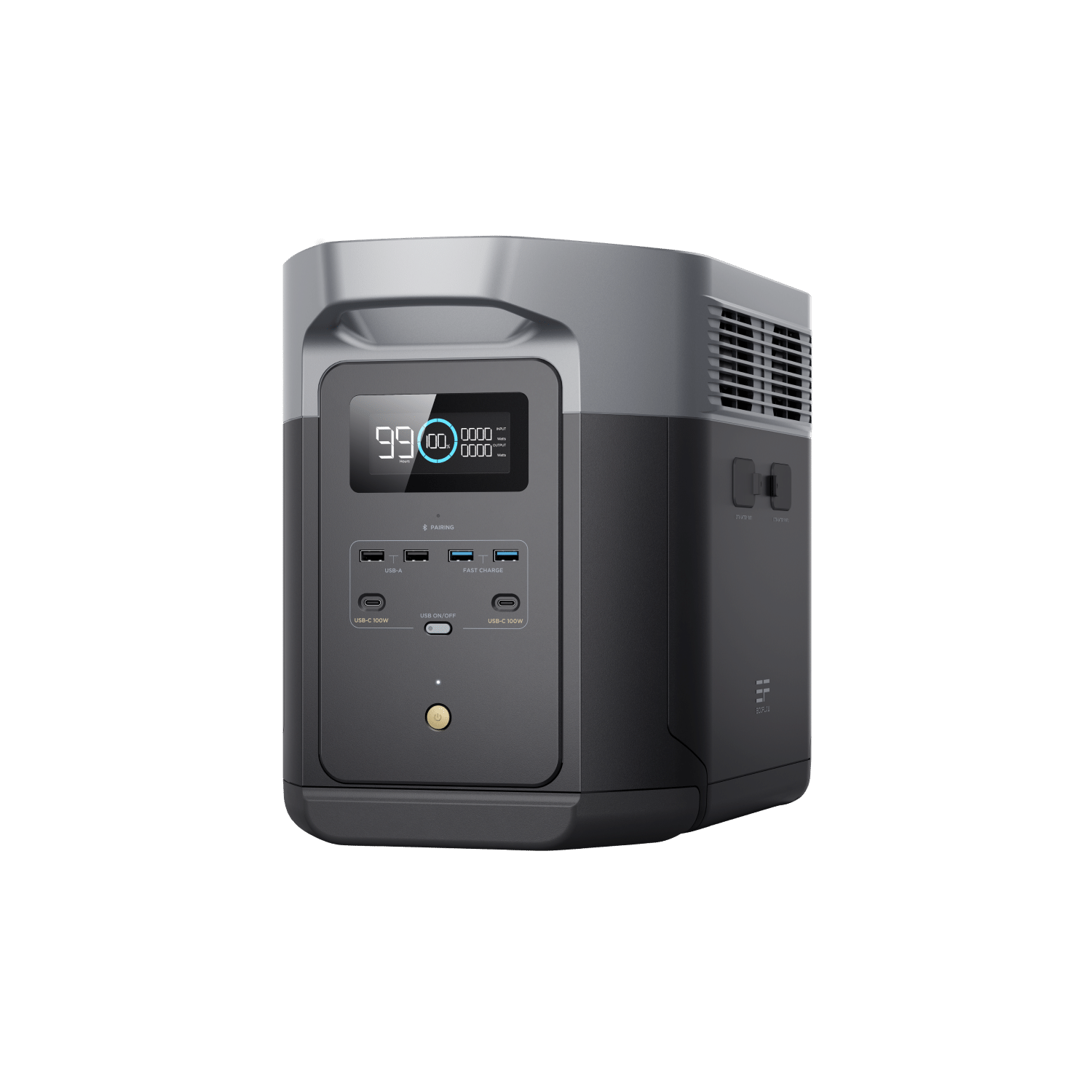
The 2,048Wh base capacity, 2,400W AC output, expansion support, and high solar-input ceiling suit a refrigerator plus other essentials.
Front and rear collection, folding construction, and matching cables simplify an EcoFlow setup.
Integrated stands and a brand-matched connection make it approachable for compatible Jackery stations.
EcoFlow publishes a 2,048Wh battery, 3,000W AC output, and 6,000W surge, providing substantial inverter headroom for an essential-load system.
Its published 2,073.6Wh LiFePO4 battery and 2,600W output cover a useful middle ground for refrigeration, communications, lighting, and managed appliances.
Jackery publishes 2,042Wh, 2,200W output, and 20ms backup switching in a familiar portable format.
A 3.84kWh base battery, 6,000W output, 120/240V support, and expansion options put it in a larger home-backup category.
BUYING BASICS
Best for quiet indoor backup, short outages, apartments, and smaller essential loads. Capacity is measured in watt-hours; output is measured in watts.
Panel ratings are lab maximums. Plan around fewer real-world watts and enough daylight to recharge while also powering your load.
Add every running watt, identify the largest startup surge, and decide how many hours the system must cover. Our calculator makes this quick.
DETAILED GUIDES
POWER
What the October 2026 PJM emergency order covered, what it does not prove about outages today, and how to plan backup power for your household.
Read the guidePOWER
Choose enough usable battery, compressor-starting output, and recharge capability to protect refrigerated food during an outage.
Read the guidePOWER
Compare the three ecosystems by capacity, output, charging, expansion, battery chemistry, ports, warranty, and accessory lock-in.
Read the guidePOWER
Match voltage, current, connectors, practical output, weight, weather resistance, and deployment time to the battery you already own.
Read the guideSOLAR POWER
Compare current portable power stations for essential appliances, larger backup loads, solar recharging, expansion, and 120/240V capability.
Read the guidePOWER
A practical comparison of power, runtime, indoor use, noise, maintenance, refueling, solar recovery, and total system cost.
Read the guidePOWER
Size quiet, indoor CPAP backup by measured overnight energy use, humidifier settings, battery capacity, output type, and recharge plan.
Read the guidePOWER
Match a sump pump's measured running load and startup surge to a battery station before the storm reaches your basement.
Read the guidePOWER
Keep a modem, router, fiber terminal, and small network online through short outages by matching real wattage to UPS runtime.
Read the guideCOMMUNICATION
Compare alerting, reception, battery options, lighting, and charging—and choose a radio you will actually maintain and test.
Read the guidePOWER
Compare dependable room lighting by battery options, usable brightness, runtime, charging, and readiness between outages.
Read the guideCOMMUNICATION
Keep phones and small USB equipment running by matching capacity, ports, charging speed, cables, and airline limits to the kit.
Read the guidePOWER
Protect frozen food with measured daily energy, compressor-starting output, usable battery capacity, temperature checks, and a recharge plan.
Read the guidePOWER
Compare batteries and fuel generators by runtime, indoor use, noise, output, recharge, fuel, maintenance, cost, and outage length.
Read the guidePOWER
Check battery watt-hours, usable efficiency, refrigerator daily energy, compressor startup surge, and recharge speed before buying.
Read the guide